

The average american home contains over 300,000 items, highlighting just how easy it is for clutter to pile up. Many people find themselves overwhelmed by crowded closets and chaotic schedules, searching for ways to reconnect with what truly matters. Minimalist living offers a refreshing shift toward simplicity and deliberate choices, guiding you to create spaces that feel open, peaceful, and purposeful as you discover practical steps for a more intentional lifestyle.
Table of Contents
- Defining Minimalist Living And Core Concepts
- Types Of Minimalism And Key Characteristics
- Practical Benefits For Homeowners And Families
- Decluttering Methods And Organization Strategies
- Common Challenges And How To Overcome Them
Key Takeaways
| Point | Details |
|---|---|
| Core Concept of Minimalism | Minimalism focuses on intentionality and simplicity, encouraging individuals to prioritize essential elements and eliminate distractions. |
| Types of Minimalism | Various approaches include design, lifestyle, digital, mental, and financial minimalism, each emphasizing a streamlined and purposeful way of living. |
| Practical Benefits | Minimalist living reduces cleaning time, lowers household expenses, enhances family interactions, and promotes mental clarity through organized spaces. |
| Challenges and Solutions | Emotional attachments and social pressures can hinder the transition to minimalism, but self-compassion and strategic methods can facilitate the process. |
Defining Minimalist Living and Core Concepts
Minimalist living represents a deliberate lifestyle approach focused on simplicity and intentionality. According to ArchitectureCourses, this philosophy emphasizes concentrating on essential elements while systematically eliminating anything that doesn’t serve a clear purpose or generate genuine joy.
At its fundamental core, minimalism transcends mere decluttering. As EnvyNature explains, this lifestyle centers on stripping away non-essential elements to create environments that are open, uncluttered, and profoundly intentional. It’s about making conscious choices that align with your core values and priorities.
Minimalist living isn’t about creating sterile, empty spaces. Instead, it’s a thoughtful approach to curating your environment and possessions. Key characteristics include:
- Prioritizing quality over quantity
- Selecting multifunctional furniture
- Creating clean, purposeful spaces
- Reducing visual and mental clutter
- Focusing on items that genuinely enhance your life
By embracing minimalism, individuals can create living spaces that not only look aesthetically pleasing but also support mental clarity and emotional well-being.
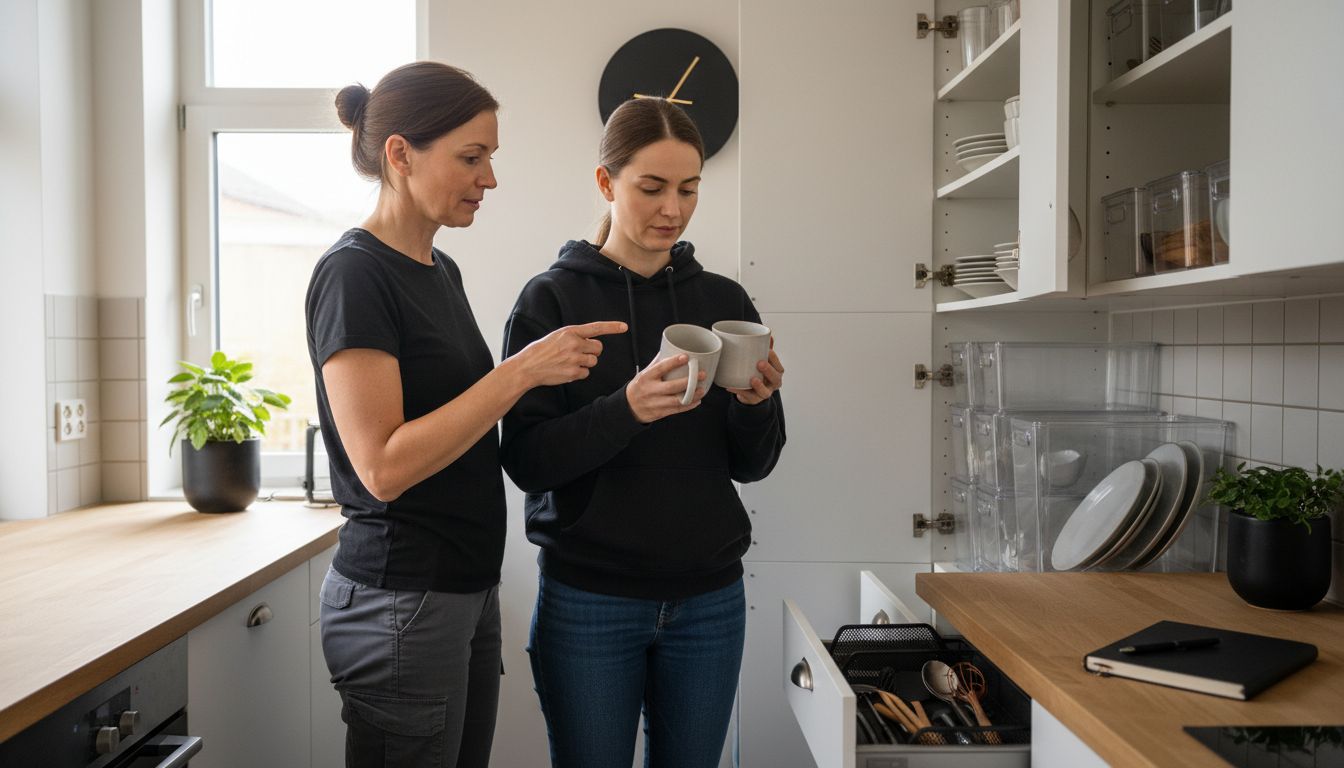 Minimalist Home Organization can transform your space from chaotic to serene, helping you focus on what truly matters.
Types of Minimalism and Key Characteristics
Minimalism isn’t a one-size-fits-all approach, but rather a spectrum of lifestyle and design philosophies. According to ArchitectureCourses, minimalist design is fundamentally guided by principles of simplicity, functionality, and harmony, characterized by clean lines, neutral color palettes, and strategic use of natural materials.
There are several distinct approaches to minimalism that individuals can explore:
- Design Minimalism: Focuses on creating aesthetically clean, uncluttered spaces
- Lifestyle Minimalism: Emphasizes reducing personal possessions and commitments
- Digital Minimalism: Streamlining digital interactions and technology usage
- Mental Minimalism: Reducing mental clutter and focusing on essential thoughts and goals
- Financial Minimalism: Simplifying financial strategies and reducing unnecessary expenses
The Art Story notes that minimalism fundamentally involves a strict reduction approach, utilizing monochromatic palettes and eliminating non-essential elements to focus on core essence. This principle applies not just to visual design, but to lifestyle choices as well.
While each type of minimalism has unique characteristics, they share core principles: intentionality, simplicity, and a commitment to removing distractions.
10 Home Organization Tips can help you start implementing minimalist strategies in your daily life, transforming your environment and mental space.
Practical Benefits for Homeowners and Families
Minimalist living offers substantial practical advantages for families seeking simplicity and efficiency. According to Art in Context, this approach can lead to significant cost savings by requiring fewer materials and simpler maintenance processes, ultimately reducing both financial and mental burdens.
The mental health benefits are equally compelling. Happiest Life reveals that adopting minimalism can dramatically enhance personal well-being by reducing stress and anxiety. An organized, clutter-free environment creates mental and physical space for reflection, learning, and personal growth.
Practical benefits for homeowners and families include:
- Reduced Cleaning Time: Fewer items mean less time spent organizing and maintaining spaces
- Lower Household Expenses: Mindful purchasing reduces unnecessary spending
- Enhanced Family Interactions: Simplified spaces encourage more meaningful connections
- Improved Mental Clarity: Less visual clutter translates to reduced mental overwhelm
- Better Space Utilization: Strategic design maximizes available living areas
By implementing minimalist principles, families can transform their living environments into peaceful, efficient spaces.
 Vertical Storage Solutions can further support this journey by offering smart, space-saving organizational strategies that complement minimalist living principles.
Decluttering Methods and Organization Strategies
Effective decluttering begins with strategic decision-making techniques that help individuals transform their living spaces. According to ArchitectureCourses, the innovative 20/20 rule provides a simple framework for letting go of unnecessary items. This approach suggests that if you can replace an item for less than $20 and in under 20 minutes, you can confidently release it from your collection.
Envy Nature emphasizes that minimalist decluttering isn’t just about removing items, but evaluating possessions to determine what genuinely adds meaning to your life. This intentional approach transforms organization from a mundane task into a profound personal reflection.
Key decluttering strategies include:
- Category-Based Sorting: Tackle items by category, not location
- One-In-One-Out Rule: Remove an item every time you bring something new home
- 30-Day Challenge: Box items you’re uncertain about and review after a month
- Emotional Attachment Assessment: Question the true value of sentimental items
- Seasonal Rotation: Regularly cycle and evaluate your belongings
Professional organizers recommend starting small and building momentum. Closet Cleanout Tips can provide additional guidance for transforming cluttered spaces into streamlined, purposeful environments that support your minimalist lifestyle.
Common Challenges and How to Overcome Them
Transitioning to a minimalist lifestyle isn’t always straightforward. ArchitectureCourses highlights a critical misconception that minimalism is either extremely cheap or prohibitively expensive. In reality, minimalism prioritizes quality over quantity, which might mean higher initial investments but results in fewer, more meaningful purchases over time.
Happiest Life emphasizes that the psychological barriers to adopting minimalism can be significant. Changing consumption habits and letting go of possessions triggers emotional resistance that many individuals struggle to overcome.
Common minimalism challenges include:
- Emotional Attachment: Difficulty releasing sentimental items
- Social Pressure: Feeling judged by friends and family for having less
- Consumption Habits: Breaking ingrained shopping and accumulation patterns
- Financial Misconceptions: Believing minimalism requires expensive design
- Fear of Scarcity: Worrying about getting rid of potentially useful items
Overcoming these challenges requires patience, self-compassion, and a strategic approach. Where to Start When Your Whole House is a Mess can provide additional guidance for navigating the initial stages of your minimalist transformation.
Transform Your Home with Smart Minimalist Organization
Struggling to create a peaceful and uncluttered home that truly supports your minimalist lifestyle The article highlights common challenges like emotional attachment and consuming habits that make decluttering overwhelming. If you want to prioritize quality over quantity and reduce mental clutter, you need practical, stylish solutions to simplify your space while enhancing your home’s beauty and function.
Discover how BlushBees offers a range of durable, space-saving storage boxes, baskets, and dividers designed specifically for busy households. These products help you organize every room efficiently so you can enjoy a calm environment with less stress and more clarity. Start your transformation today by visiting BlushBees and explore tips on closet cleanout or vertical storage solutions that bring minimalist principles to life. Make decluttering simple, effective, and beautiful now.
Frequently Asked Questions
What is minimalist living?
Minimalist living is a lifestyle focused on simplicity and intentionality, prioritizing essential elements while eliminating anything that does not serve a clear purpose or bring joy.
What are the core principles of minimalism?
The core principles of minimalism include intentionality, simplicity, prioritizing quality over quantity, reducing visual and mental clutter, and making conscious choices that align with one’s core values.
What are some practical benefits of adopting a minimalist lifestyle?
Adopting a minimalist lifestyle can lead to reduced cleaning time, lower household expenses, enhanced family interactions, improved mental clarity, and better utilization of space.
How can I start decluttering my home effectively?
Start decluttering by using strategies like category-based sorting, the one-in-one-out rule, a 30-day challenge, assessing emotional attachments, and seasonal rotation of belongings.
Recommended
- Understanding Minimalist Home Organization for a Stylish Space – BLUSHBEES USA
- Closet Organization Tips 2025: Stylish & Easy Solutions – BLUSHBEES USA
- 10 Home Organization Tips for a More Tidy and Efficient Living Space – BLUSHBEES USA
- Open Shelving Organization Ideas for Stylish Homes 2025 – BLUSHBEES USA
- Minimalist Skincare: Everything You Need to Know
- Minimalist Web Design: Complete Guide for Businesses - seo analytic

