

Over half of American families say cluttered playrooms make daily routines stressful. When toys spill from every bin and shelf, even finding a favorite puzzle becomes a challenge. Tackling toy organization is more than just a weekend chore for busy American households. With clear guidance, you can create a space that sparks creativity, keeps clean-up simple, and supports your child’s development without daily battles or hidden messes.
Table of Contents
- Step 1: Clear Out And Assess All Toys
- Step 2: Sort And Group Toys By Category
- Step 3: Select And Label Suitable Storage Bins
- Step 4: Arrange Bins For Easy Access And Aesthetics
- Step 5: Establish And Maintain A Regular Cleanup Routine
Quick Summary
| Key Insight | Explanation |
|---|---|
| 1. Clear Out and Assess Toys | Remove all toys and categorize them into keep, donate, or discard piles for better organization. |
| 2. Sort and Group by Category | Engage children in sorting toys to promote cognitive skills and make clean-up fun and educational. |
| 3. Select Functional Storage Bins | Use clear and stackable bins for visibility and ease of access, ensuring they are appropriately sized for different toys. |
| 4. Arrange Bins for Accessibility | Position storage at a child’s eye level and group by frequency of use to encourage independence. |
| 5. Establish a Cleanup Routine | Set a daily cleanup time with rewards or music to make tidying a fun, expected family activity. |
Step 1: Clear Out and Assess All Toys
Prepare to transform your home’s toy storage by systematically clearing out and assessing your toy collection. This crucial first step will help you create a more organized and manageable play space for your children.
Start by removing all toys from their current storage areas, creating a blank canvas for reorganization. Sorting through toy collections strategically allows you to gain a comprehensive view of what toys you actually have. Spread everything out on a large surface like a clean floor or table, which enables you to see each item clearly and make deliberate decisions about what stays and what goes.
Begin categorizing toys into specific groups such as STEM toys, arts and crafts supplies, board games, plush toys, and building sets. This methodical approach helps you assess each toy’s condition, frequency of use, and current relevance to your child’s interests and developmental stage. As you sort, create three distinct piles: keep, donate, and discard. For toys in good condition that your children have outgrown, consider donating to local schools, daycare centers, or charitable organizations.
Pro Tip: Take photos of sentimental toys you plan to donate or discard, preserving memories without keeping physical clutter. This strategy allows you to let go of items more easily while maintaining a digital memory album.
Step 2: Sort and Group Toys by Category
Transform toy chaos into a well-organized system by methodically sorting and categorizing your children’s playthings. This strategic approach will not only create a more manageable play space but also support your child’s cognitive development and organizational skills.
Engaging children in the sorting process can turn organization into an educational activity. Start by creating broad categories that make sense for your family such as building toys, art supplies, board games, electronic toys, pretend play items, and educational sets. As you group items, invite your children to participate and help classify toys based on shared characteristics like material, function, or play type. This collaborative approach teaches them valuable classification skills while making the organization process more interactive and fun.
Consider using clear storage containers or color coded bins for each toy category, which helps maintain the sorting system and makes future cleanup easier. Be prepared to adjust your categories as your children grow and their interests change. Some helpful grouping strategies include separating toys by age appropriateness, educational value, indoor versus outdoor play, and frequency of use. For smaller items like action figures or building blocks, use drawer dividers or small compartmentalized boxes to keep collections neat and easily accessible.
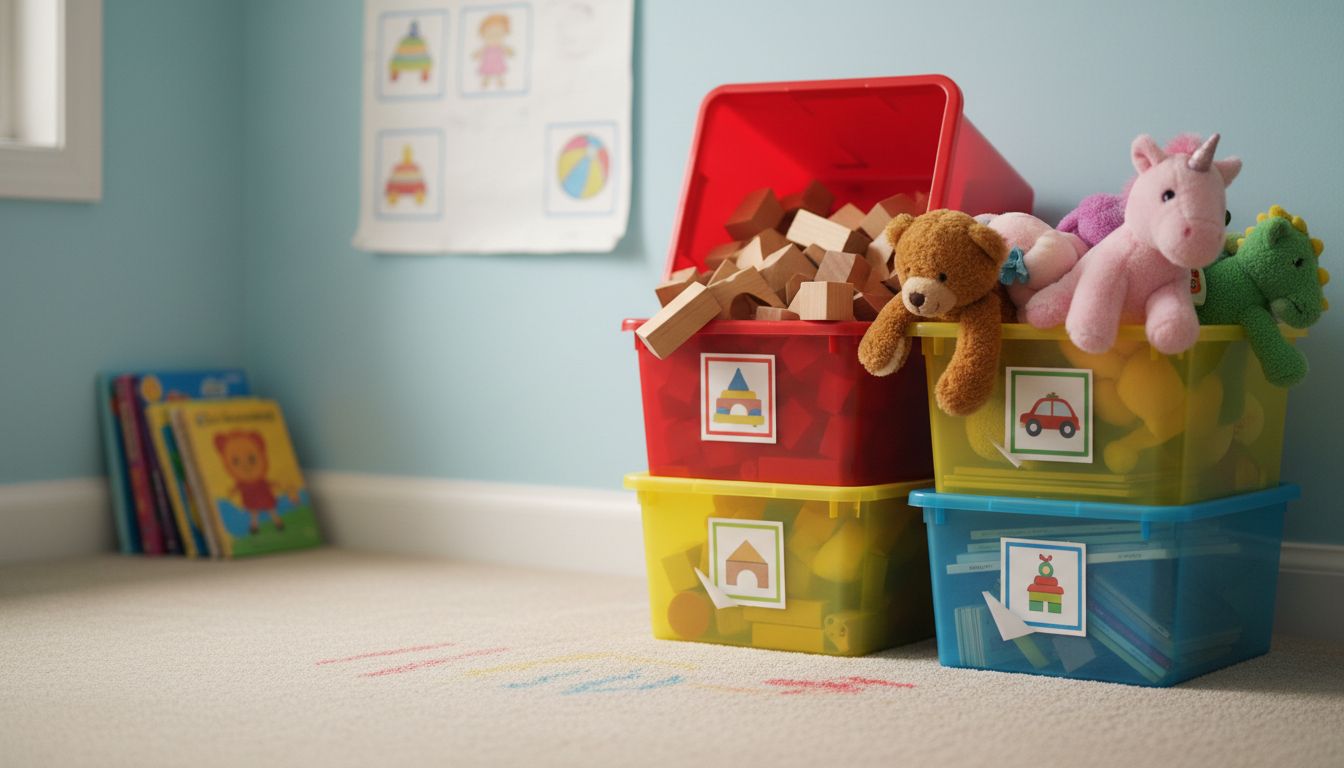
Pro Tip: Create a simple visual chart or label system with pictures that helps children understand where each toy category belongs, making future cleanup more intuitive and encouraging their independent organizational skills.
Here’s a quick comparison of popular toy grouping strategies to help optimize your organization plan:
| Grouping Strategy | Benefits | Ideal Use Cases |
|---|---|---|
| By Toy Type | Simplifies locating toys | Multi-age households |
| By Age Appropriateness | Ensures safe, relevant play | Young children, toddlers |
| By Frequency of Use | Eases daily cleanup | Limited space areas |
| By Educational Value | Supports learning and skill-building | Home classrooms, learning zones |
Step 3: Select and Label Suitable Storage Bins
Discovering the perfect storage solution for your toy collection requires careful consideration of both functionality and accessibility. The right bins will transform your organizational approach and make toy management significantly easier for your entire family.
Open storage containers provide an ideal solution for keeping toys visible and reachable for children. Select transparent or mesh bins that allow kids to see their toys without pulling everything out. Consider a variety of bin sizes to accommodate different toy types plastic building blocks might need smaller containers while large stuffed animals require roomier options. Look for durable materials like sturdy plastic or fabric that can withstand frequent use and occasional rough handling by children.
Creative labeling is key to maintaining an organized system. Use picture labels for younger children who cannot read text yet create color coded tags or use clear vinyl label holders that can be easily updated as toy collections change. Incorporate multipurpose storage furniture like ottomans or benches with built in compartments to maximize space efficiency. Choose neutral colors that blend with your existing decor or select playful bins that add a fun element to your child’s play area.
Pro Tip: Invest in stackable bins with interlocking designs that prevent toppling and allow for flexible storage configurations as your child’s toy collection evolves.
Below is a summary of toy storage bin types and their primary advantages:
| Storage Bin Type | Main Advantage | Best Suited For |
|---|---|---|
| Clear Plastic Bins | Easy content visibility | Small parts, art supplies |
| Mesh Bins | Good air circulation | Plush toys, sports equipment |
| Stackable Bins | Space-saving, modular | Building sets, puzzles |
| Labeled Fabric Bins | Customizable and soft | Nursery, multi-use play spaces |
Step 4: Arrange Bins for Easy Access and Aesthetics
Transforming your toy storage strategy requires thoughtful placement that balances functionality with visual appeal. The goal is creating a system that looks great and works seamlessly for both parents and children.
Position storage bins at a child’s eye level to encourage independent play and cleanup while making the space feel intentionally designed. Consider installing low shelving units or using floor level bins with easy pull handles that allow children to retrieve and return toys without adult assistance. Arrange bins by frequency of use placing most popular toys in the most accessible locations and rotating less used items to higher or more remote shelves.
Maximize your storage potential by thinking vertically and creatively. Incorporate wall mounted shelving systems that lift toys off the floor and create additional play space. Choose a consistent color palette for your bins and shelving to create a cohesive look that blends with your room’s existing decor. Group similar categories together creating visual zones that make cleanup intuitive for children while maintaining an aesthetically pleasing environment. Select lightweight bins with smooth edges that can be easily moved and repositioned as your child’s play needs evolve.
Pro Tip: Use removable adhesive hooks or adjustable mounting systems to create flexible storage solutions that can grow and change with your family’s needs.
Step 5: Establish and Maintain a Regular Cleanup Routine
Transforming toy organization from chaos to consistency requires creating a predictable and engaging cleanup system that becomes a natural part of your family’s daily rhythm. The key is making tidying up feel less like a chore and more like an expected family activity.
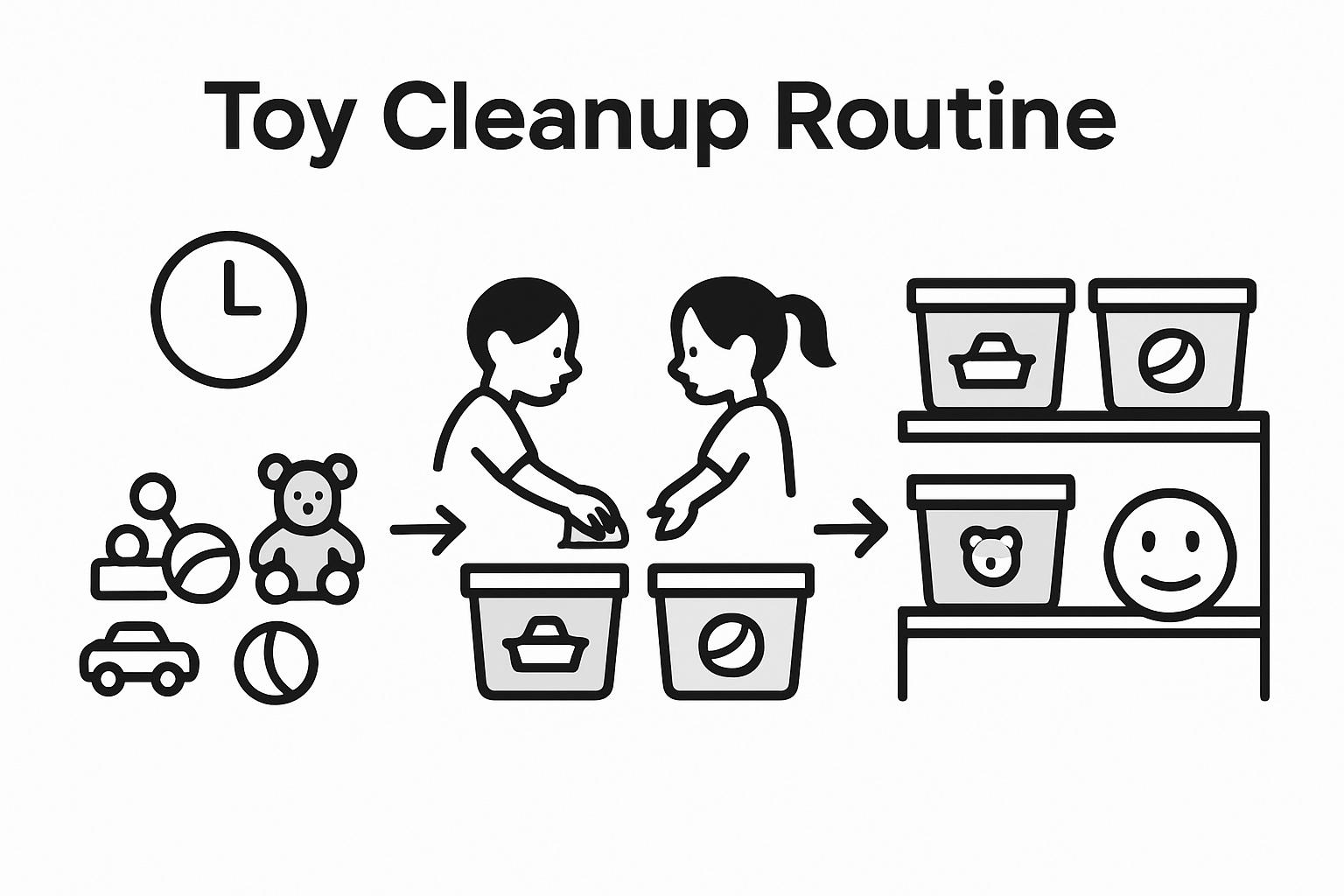
Set a consistent daily time for tidying up toys to instill a sense of responsibility in children. Choose a specific moment each day such as before dinner or right after playtime where everyone participates in a 10 minute cleanup sprint. Use a timer or playful music to make the process feel more like a game than a task. Create visual checklists or cleanup charts with stickers that track progress and reward children for completing their organizational duties. This approach transforms cleanup from a dreaded activity into an anticipated family ritual.
Encourage children’s participation by turning cleanup into an interactive and positive experience. Make sorting and returning toys to their designated bins feel like a collaborative game where everyone has a role. Assign specific tasks based on age teaching younger children to match toys with their corresponding storage areas while older kids can help with more complex sorting and organizing. Use positive reinforcement like praise or small rewards to motivate consistent behavior. Remember that developing organizational habits takes time and patience so maintain a supportive and encouraging approach.
Pro Tip: Create a cleanup playlist with upbeat songs that make tidying feel fun and energetic, transforming a potentially boring task into an enjoyable family activity.
Transform Your Toy Clutter into a Neat and Beautiful Space
Struggling with toy overload and messy bins Our article highlights the challenges of sorting, categorizing, and storing toys in a way that is both functional and child-friendly. We know the feeling of wanting a clutter-free home while still keeping playtime fun and accessible. The key pain points include finding durable and easy-access storage solutions, creating labeled and visible bins, and establishing routines that everyone follows. With terms like “stackable bins,” “clear storage containers,” and “child eye-level access,” it becomes clear that smart storage choices make all the difference.
Ready to take charge of your kid’s play area With our Bedroom Storage options at BLUSHBEES USA you can finally organize toys with style and ease.
Explore a range of durable storage bins and baskets designed to keep toys visible and within reach. Choose from stackable containers to maximize space and clear bins for quick identification. Don’t wait to create a more peaceful and inviting home environment. Visit BLUSHBEES USA now to find practical and stylish storage solutions that grow with your family needs. Make toy organization effortless and enjoyable today!
Frequently Asked Questions
How can I start organizing my children’s toys effectively?
Begin by removing all toys from their storage areas to create a clean slate. Categorize the toys into groups, such as building toys and arts and crafts, then create three piles: keep, donate, and discard.
What types of storage bins are best for organizing toys?
Opt for transparent or mesh bins as they allow children to see their toys easily. Choose various sizes to fit different types of toys and consider stackable options to maximize space efficiency.
How can I involve my children in the toy organization process?
Engage your children by inviting them to help sort and categorize their toys. This interaction teaches them valuable organizational skills while making the cleanup process fun and collaborative.
What are some effective ways to label toy storage bins?
Use clear picture labels for younger children who can’t read yet, or color-coded labels that can be easily updated. Ensure labels are visible and directly relate to the contents of each bin to encourage independent play and organization.
How can I maintain an organized toy space over time?
Establish a daily cleanup routine that involves the whole family to instill a sense of responsibility. Set a specific time each day for a quick 10-minute cleanup session, making it feel like a fun family activity rather than a chore.
What should I do with toys my children have outgrown?
Consider donating toys that are still in good condition to local schools or charitable organizations. This not only helps those in need but also clears out your space, keeping it organized and clutter-free.

