

Over 60 percent of American urban homes report struggling with cluttered storage spaces, turning busy mornings into daily stress. For working mothers, every organized minute means more time for what truly matters. Stylish, practical storage dividers offer a simple way to reclaim control over kitchen drawers, closets, and cabinets while adding a touch of elegance. Discover how the right dividers can transform chaotic corners into organized, functional areas that truly support modern family life.
Table of Contents
- What Are Storage Dividers And Why Use Them
- Types Of Storage Dividers Explained
- Essential Features For Maximum Space Efficiency
- Practical Ways To Use Dividers At Home
- Common Mistakes When Choosing Dividers
Key Takeaways
| Point | Details |
|---|---|
| Functionality of Storage Dividers | Storage dividers enhance organization by providing clear separation, preventing clutter, and maximizing available space in various settings. |
| Material Variety | Dividers come in multiple materials such as plastic, wood, and metal, each offering different durability and aesthetic benefits tailored to specific use cases. |
| Adjustability and Modularity | Choosing adjustable and modular storage dividers allows for customization as storage needs evolve, ensuring long-term functionality. |
| Common Mistakes | Homeowners often overlook accurate measurements and material quality, leading to ineffective organization; thorough planning is essential before selection. |
What Are Storage Dividers and Why Use Them
Storage dividers are specialized organizational tools designed to help homeowners create clear boundaries and maximize space efficiency within drawers, cabinets, closets, and other storage areas. Unlike traditional shelving, these versatile solutions provide targeted compartmentalization that transforms chaotic spaces into structured environments.
At their core, storage dividers serve multiple essential functions beyond simple separation. Room dividers support flexible space usage by creating adaptable interior layouts without permanent construction. They enable users to customize storage areas, prevent items from shifting or mixing, and create visual order that reduces mental clutter. Particularly for busy working mothers, these organizational tools can mean the difference between a stressful morning scramble and a smooth, efficient routine.
Storage dividers come in various materials and designs, ranging from adjustable plastic inserts for kitchen drawers to elegant wooden partitions for closet spaces. Their primary benefits include:
- Maximizing available storage space
- Preventing items from becoming tangled or disorganized
- Creating clear visual boundaries between different categories of belongings
- Simplifying daily organization and retrieval of items
- Reducing visual chaos in living spaces
While many assume storage dividers are purely functional, modern designs also contribute aesthetic value. Sleek, minimalist dividers can complement existing decor while providing practical organizational solutions that streamline household management.
Here’s a summary of key materials used in storage dividers and their benefits:
| Material Type | Durability Level | Aesthetic Appeal | Best Use Case |
|---|---|---|---|
| Plastic | Moderate | Modern, neutral | Kitchen drawers, utensils |
| Wood | High | Warm, stylish | Closet, living room spaces |
| Metal | Very high | Sleek, industrial | Cabinets, heavy items |
| Acrylic | High | Clear, understated | Display items, offices |
| Bamboo | High | Eco-friendly, natural | Closets, decorative areas |
Pro tip: When selecting storage dividers, measure your spaces precisely and choose adjustable models that can grow and adapt with your changing organizational needs.
Types of Storage Dividers Explained
Storage dividers represent a diverse range of organizational solutions designed to transform cluttered spaces into well-structured environments. Room dividers encompass multiple design categories, including portable screens, modular panels, and specialized compartment systems that cater to different storage needs across home and office settings.
The primary categories of storage dividers include:
- Drawer Dividers
- Adjustable plastic or metal inserts
- Fixed grid-style compartments
- Expandable designs that fit multiple drawer sizes
- Closet Dividers
- Vertical hanging separators
- Shelf-based compartment creators
- Modular systems with adjustable configurations
- Cabinet Dividers
- Tension-based rod systems
- Stackable plastic or wooden partitions
- Pull-out tray organizers
These storage solutions include permanent and temporary installations, ranging from built-in shelving to portable folding screens. Kitchen enthusiasts and home organizers can select dividers that not only maximize space but also complement existing decor. Kitchen cabinet divider strategies offer specialized solutions for managing cookware, utensils, and pantry items efficiently.
Modern storage dividers go beyond basic functionality, incorporating design elements that enhance aesthetic appeal. Sleek materials like bamboo, acrylic, and powder-coated metal provide both organizational efficiency and visual elegance, allowing homeowners to create spaces that are simultaneously practical and stylish.
Compare the primary types of storage dividers to quickly see which is best for your needs:
| Divider Type | Adjustability | Installation | Typical Locations |
|---|---|---|---|
| Drawer Divider | Expandable, flexible | No-tools or minimal | Kitchen, bathroom, office |
| Closet Divider | Highly modular | Hanging or shelved | Bedroom, entryways |
| Cabinet Divider | Adjustable, fixed | Mounted or freestanding | Kitchen, garage |
Pro tip: Invest in adjustable divider systems that can be reconfigured as your storage needs change, ensuring long-term organizational flexibility and value.
Essential Features for Maximum Space Efficiency
Maximizing space efficiency requires strategic selection of storage dividers with carefully engineered features that transform cluttered areas into organized sanctuaries. Storage systems prioritize flexibility and adaptability as core principles for creating dynamic, responsive organizational solutions that meet evolving household needs.
The most effective storage dividers demonstrate several critical features:
- Adjustability: Capable of reconfiguring to accommodate changing storage requirements
- Modularity: Designed with interchangeable components for customized organization
- Compact Design: Minimizing physical footprint while maximizing internal storage capacity
- Durability: Constructed from robust materials that withstand frequent use and reorganization
Space efficiency strategies focus on creating intelligent storage solutions that work smarter, not harder. Vertical integration becomes key, with dividers that utilize height and wall spaces to maximize available square footage. Modern storage solutions incorporate lightweight yet strong materials like aluminum, high-grade plastics, and reinforced composites that provide structural integrity without adding unnecessary weight.
Technological advancements have transformed storage dividers from simple partitions into sophisticated organizational tools. Innovative designs now incorporate features like built-in measurement guides, magnetic attachments, and tension-based locking mechanisms that ensure precise placement and ultimate flexibility. These advanced systems allow users to create custom storage configurations that adapt seamlessly to changing household dynamics.
Pro tip: Measure your storage spaces precisely before purchasing dividers, and opt for systems with multiple adjustment points to guarantee maximum versatility and long-term usability.
Practical Ways to Use Dividers at Home
Storage dividers transform living spaces by creating intelligent organizational zones that maximize functionality and aesthetic appeal. Room dividers offer versatile solutions for managing home layouts, enabling homeowners to reimagine their living environments with strategic spatial planning.
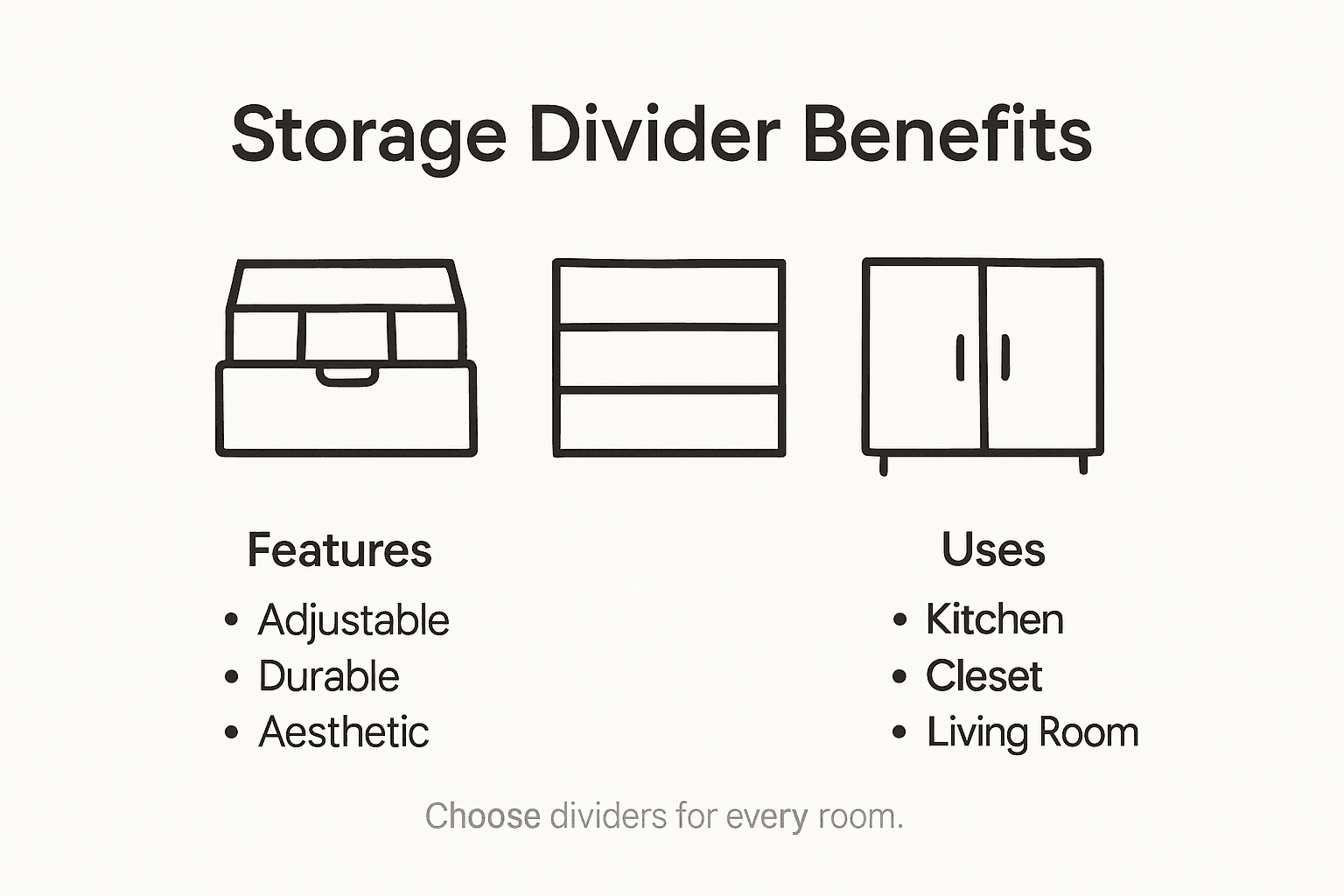
Practical applications for storage dividers span multiple household areas:
- Kitchen Organization
- Separate utensil categories
- Create designated spice and seasoning zones
- Manage cutlery and cooking tool collections
- Closet Management
- Segment clothing types
- Create shoe and accessory compartments
- Organize seasonal wardrobe items
- Home Office Setup
- Define workspace boundaries
- Separate work and personal storage zones
- Manage office supply collections
DIY closet divider strategies demonstrate how homeowners can customize storage solutions to match their specific spatial requirements. Innovative approaches include repurposing existing materials, creating modular systems, and designing multi-functional dividers that serve both organizational and decorative purposes.
Beyond traditional storage applications, modern dividers can transform living spaces by creating privacy, redirecting foot traffic, and visually segmenting multifunctional rooms. Advanced designs incorporate materials like tempered glass, lightweight metals, and sustainable composites that enhance both organizational efficiency and interior aesthetics.

Pro tip: Select storage dividers that offer multiple configuration options, allowing you to adapt your organizational system as your lifestyle and storage needs evolve.
Common Mistakes When Choosing Dividers
Choosing storage dividers might seem straightforward, but homeowners frequently make critical errors that compromise their organizational efforts. Storage system selection requires careful consideration of potential safety and efficiency risks, with many individuals overlooking crucial factors that can undermine their organizational goals.
The most prevalent mistakes when selecting storage dividers include:
-
Ignoring Measurements
- Purchasing dividers without precisely measuring available space
- Selecting oversized or undersized compartments
- Failing to account for item dimensions
-
Neglecting Material Quality
- Choosing cheap, fragile materials that quickly deteriorate
- Overlooking weight capacity and structural integrity
- Selecting dividers incompatible with specific storage environments
-
Disregarding Functionality
- Prioritizing aesthetic appeal over practical usability
- Selecting fixed dividers without adjustability
- Ignoring specific organizational needs
Drawer divider selection strategies demonstrate that successful organization requires more than just purchasing random storage solutions. Homeowners must consider their specific spatial constraints, item types, and long-term organizational goals when making selections.
Additionally, many consumers make the mistake of treating storage dividers as one-size-fits-all solutions. Each space has unique requirements, and dividers should be selected based on specific needs such as material durability, flexibility, and compatibility with existing storage systems. Understanding these nuanced considerations can prevent costly organizational mistakes and ensure effective space management.
Pro tip: Always create a detailed inventory of items you plan to organize before purchasing dividers, and take precise measurements to guarantee a perfect fit.
Elevate Your Home Organization with Smart Storage Dividers
If you struggle with cluttered drawers, chaotic closets, or disorganized kitchen cabinets, the right storage dividers can make all the difference. The article highlights key challenges such as maximizing space efficiency, preventing items from mixing, and creating adaptable storage zones. At BLUSHBEES USA, we understand that busy households need stylish yet practical solutions designed to simplify daily routines while enhancing your living spaces.

Explore our wide selection of expertly crafted storage dividers and organizers in the Kitchen Storage and Bedroom Storage collections. Each product is designed with durability, adjustability, and aesthetic appeal in mind to help you create neat, personalized compartments that keep your home tidy and stress-free. Don’t wait to transform your space — visit BLUSHBEES USA today and discover how easy creating order can be.
Frequently Asked Questions
What are storage dividers and how do they help with organization?
Storage dividers are organizational tools that create clear boundaries and compartments in drawers, cabinets, and closets, maximizing space and reducing clutter by preventing items from shifting or mixing.
What materials are commonly used for storage dividers, and what are their benefits?
Common materials include plastic, wood, metal, acrylic, and bamboo. Each material offers different durability levels, aesthetic appeal, and best use cases, making it important to select a material that fits your specific organizational needs.
How can I effectively use storage dividers in my kitchen?
In the kitchen, storage dividers can be used to separate utensil categories, create zones for spices and seasonings, and manage collections of cutlery and cooking tools efficiently.
What are common mistakes to avoid when choosing storage dividers?
Common mistakes include ignoring measurements of available space, neglecting material quality, and disregarding functionality. It’s important to measure accurately and consider the specific needs and dimensions of the items you plan to organize.
Recommended
- DIY Closet Dividers: Stylish Organization Ideas for 2025 – BLUSHBEES USA
- Shelf Organization Ideas for Stylish and Smart Storage 2025 – BLUSHBEES USA
- 10 Home Organization Tips for a More Tidy and Efficient Living Space – BLUSHBEES USA
- Closet Organization Tips 2025: Stylish & Easy Solutions – BLUSHBEES USA

